

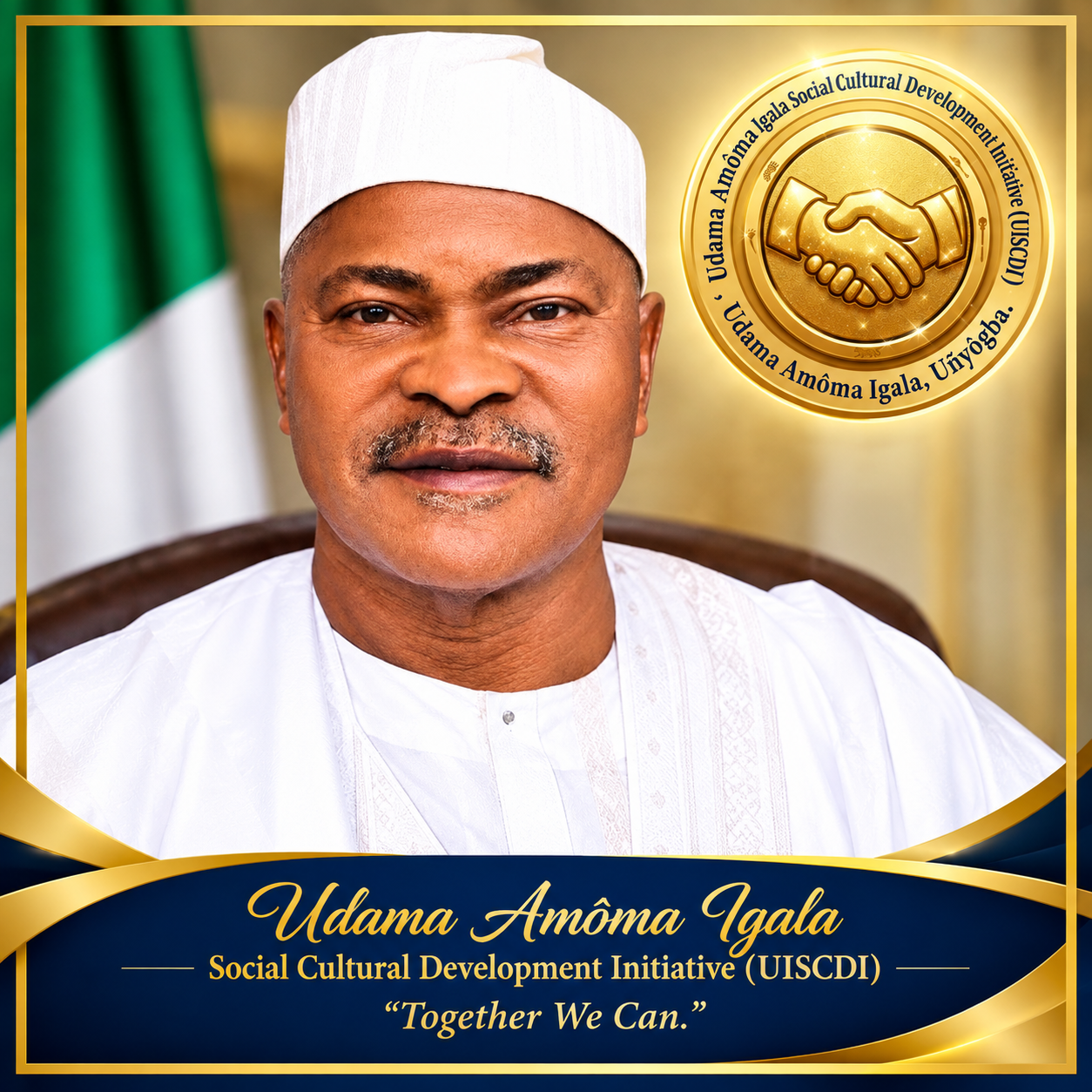
The Udama Amôma Igala Social Cultural Development Initiative (UISCDI), a well-established sociocultural organisation with members across the world, has expressed deep sorrow over the death of former Governor of Kogi State, Alhaji Ibrahim Idris, popularly known as “Ibro.”
Alhaji Ibrahim Idris reportedly passed away on Sunday, September 20, 2026, at a hospital in London after an illness.
The Chairman of UISCDI, Mallam Kerimu Paul, disclosed the organisation’s grief on Monday morning through its National Secretary, Comrade Sani Michael Omakoji, describing the death of the former governor as a painful loss to Kogi State, the Igala people and Nigeria at large.
Mallam Paul said the death of the former governor came at a particularly difficult time when the people of Kogi State needed the wisdom, experience and counsel of elder statesmen such as Alhaji Ibrahim Idris.
He described the late former governor as a major political figure whose years in office left enduring marks on the development of Kogi State.
Alhaji Ibrahim Idris served as Governor of Kogi State from 2003 to 2012, making him one of the longest-serving civilian governors in the history of the state. His administration was associated with major interventions in infrastructure, education, healthcare, water supply, housing, sports and institutional development.
Among the projects and initiatives associated with his administration was the Greater Lokoja Water Supply Project, which his government revived and contracted with the objective of improving access to potable water in Lokoja and surrounding communities.
His administration also embarked on major healthcare infrastructure, including the development of a large-capacity specialist hospital in Lokoja, as well as interventions in general hospitals and primary healthcare facilities across the state.
In education, the Ibrahim Idris administration was credited in retrospective accounts with extensive construction and renovation of school infrastructure, including numerous four-classroom primary-school blocks with offices across the state. Several secondary schools also benefited from renovation and other interventions.
The administration equally paid considerable attention to the development of Kogi State University, Anyigba, with efforts toward strengthening the institution and securing accreditation for academic programmes. His government was also associated with scholarships, bursaries and educational support, including assistance with WAEC and NECO examination fees for final-year secondary-school students.
In the area of transportation and physical infrastructure, the administration undertook several road construction, rehabilitation and urban development projects across the state. Among the roads and corridors associated with the period were the Ganaja–Ajaokuta corridor, Idah–Onyedega Road and Obehira–Ihima Road, alongside other roads and bridges intended to improve connectivity between communities.
The construction of the Confluence Stadium in Lokoja also became one of the notable sporting infrastructure projects associated with the administration, providing a major facility for sporting activities in the state.
The administration further pursued housing development, with housing schemes linked to areas such as Otokiti and Ganaja in Lokoja, as well as projects extending to other parts of the state. It also developed the Confluence International Market, aimed at providing a structured commercial environment and strengthening economic activities in Lokoja.
Another notable institutional project was the construction of Phase II of the Kogi State Secretariat and additional office accommodation for government ministries and agencies.
Beyond the state capital, the administration undertook projects in rural communities, including roads, bridges, schools, healthcare facilities and other public infrastructure intended to improve access to government services and stimulate development across the state.
According to UISCDI, these interventions formed part of the enduring legacy of a leader whose political career was closely associated with the development of Kogi State during a significant period of its history.
Mallam Kerimu Paul noted that while historical accounts may differ on specific figures relating to the number of schools, housing units and other projects completed during the period, the broader contribution of the Ibrahim Idris administration to infrastructure and public-service development remains an important part of Kogi State’s political history.
He said the death of Alhaji Ibrahim Idris had created an emotional vacuum, particularly among those who had benefited from his leadership, counsel and years of service to the state.
“His death is a painful reminder that a generation of leaders who contributed significantly to the foundation and development of our dear state is gradually passing on.
At this moment of grief, we remember Alhaji Ibrahim Idris not only as a former governor but as an elder statesman whose experience and counsel remained valuable to our people,” Mallam Paul said.
UISCDI therefore extended its heartfelt condolences to the people of Kogi State, the Attah of Igala Kingdom, the serving and former governors of the state, the immediate family of the late Alhaji Ibrahim Idris, his friends, associates and all those who mourn his passing.
The organisation prayed that God would grant the late former governor eternal rest and give his family, the Igala Kingdom and the people of Kogi State the strength and fortitude to bear the irreparable loss.
As Kogi State mourns one of its prominent former leaders, Udama Amôma Igala Social Cultural Development Initiative urged the people to preserve the positive aspects of his legacy and continue to draw lessons from his years of service to the state.
May the soul of Alhaji Ibrahim Idris rest in perfect peace.
