

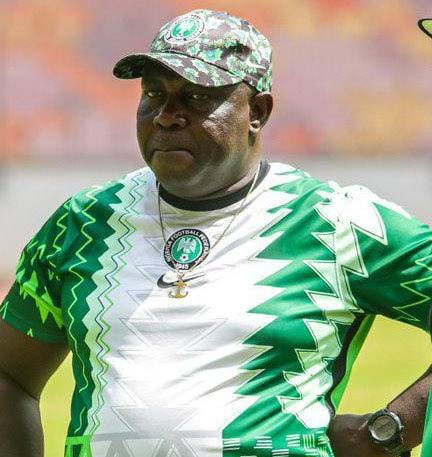
The Nigeria Football Federation is searching for a new technical crew for the Super Falcons following the dismissal of head coach Justin Madugu, with Nigerians now demanding a stronger and more competitive team ahead of the next phase of the 2028 Olympic qualifying campaign.
Madugu’s departure comes after growing scrutiny of the team’s performances and tactical direction. The Super Falcons remain Africa’s most successful women’s national team, but recent results have intensified calls for a coaching structure capable of translating Nigeria’s abundance of talent into consistent performances and major victories.
The pressure increased during the 2026 Women’s Africa Cup of Nations, where Nigeria suffered a shock 3-2 defeat to Malawi before recovering with a 1-0 victory over Zambia. The team eventually exited the tournament after a 1-0 quarter final defeat to Cameroon. Madugu subsequently accepted responsibility for the loss and apologised to Nigerians.
The search for his replacement therefore presents the NFF with an important opportunity to rethink the technical direction of the Super Falcons. The next appointment should not be based merely on reputation or familiarity. It should focus on proven coaching competence, tactical intelligence, player development, international experience and the ability to build a team capable of competing successfully at the highest level.
Nigerians are not demanding perfection from the Super Falcons. They are demanding visible improvement, tactical discipline, better game management and results that reflect the quality of players available to the country. Nigeria possesses experienced stars and emerging talents playing at competitive clubs around the world, making effective technical management particularly important.
The new coach must establish a clear football philosophy and ensure that the players understand their responsibilities. The team needs greater tactical flexibility, stronger defensive organisation, effective midfield control and a more consistent attacking structure. Coaches must also demonstrate the ability to read matches and make timely substitutions and tactical adjustments.
Player selection will be another crucial responsibility. No player should be guaranteed a place solely because of reputation, while emerging talents should receive opportunities when their performances justify inclusion. Selection should be based on form, fitness, tactical suitability, discipline and the needs of the team.
The NFF should also provide the new technical crew with adequate preparation time and the necessary resources. Constant uncertainty over coaching arrangements can undermine continuity and make it difficult for players to develop a consistent understanding of the team’s tactical system.
The 2028 Olympic qualifying campaign provides an important test of the federation’s decision. Nigeria missed the 2024 Olympics after a long absence from the competition, before returning to the Games in Paris under Randy Waldrum. The next qualification campaign should therefore be approached with careful planning rather than last minute preparation.
The objective should extend beyond Olympic qualification. The Super Falcons must maintain their position as Africa’s leading women’s football team while developing a squad capable of challenging the best teams in the world. That requires investment in coaching, scouting, player development, sports science, fitness, analytics and quality international preparation.
The NFF must also ensure that the new appointment comes with measurable performance targets. The coach should be assessed not only on tournament results but also on tactical development, player progression, squad depth, consistency and the team’s overall competitive standard.
Madugu’s tenure produced important achievements, including Nigeria’s WAFCON triumph, and his contribution should be recognised even as the federation moves in a different direction. His departure should not become an excuse for endless blame. Instead, it should provide an opportunity to learn from both the successes and shortcomings of his tenure.
What Nigerians now want is a Super Falcons team that plays with confidence, purpose and tactical clarity. They want a side capable of controlling matches, converting opportunities and responding effectively when opponents create difficulties. Most importantly, they want results that match the reputation of a nation that has won the African women’s championship a record 10 times.
The NFF therefore has a major responsibility in selecting Madugu’s successor. The decision must be transparent, professional and driven by the long term interests of Nigerian women’s football. The federation must choose a coach with the capacity to build a modern, competitive and sustainable Super Falcons side.
As the road to the 2028 Olympics continues, the message from Nigerian supporters is clear: the Super Falcons deserve better preparation, better organisation and better results. The next appointment must therefore be more than a change of coach. It must be the beginning of a new technical era designed to restore consistency, strengthen competitiveness and ensure that Nigeria’s women remain a dominant force in African and international football.
Sani Michael Omakoji, A Public Affairs Analyst on National and Trending Issues
